Načítava sa…
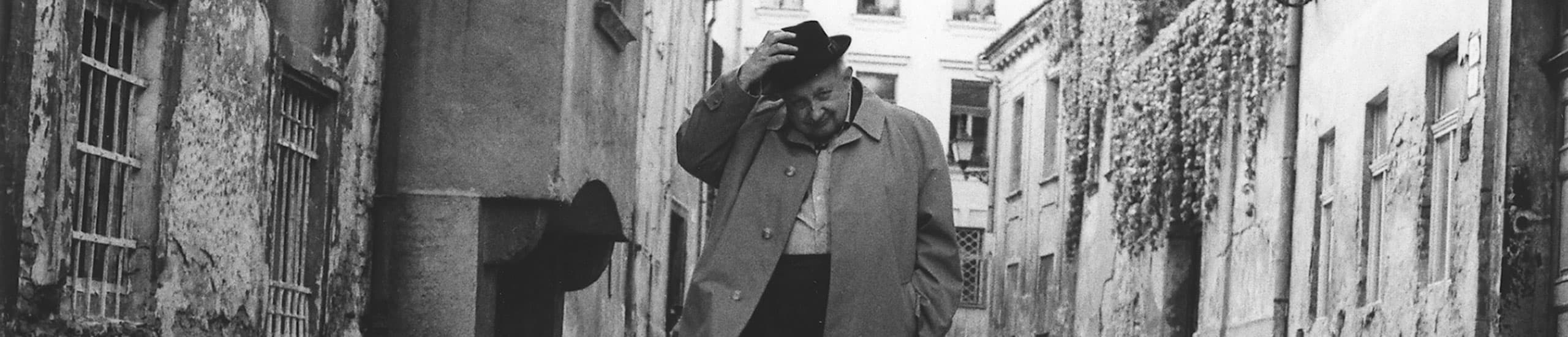
The Albrecht Family
The Albrechts
Music in the Albrecht House
The tradition of music-making in the Albrecht family stretched back further than their time in the house on Kapitulská Street. Cultivating chamber music within the family was an inseparable part of life in Bratislava's educated bourgeois society. Music rang out naturally and regularly, for instance, in the Jurenák family (at the home of Margaréta Albrecht's uncle — the husband of Alexander's wife), who had personal ties to Brahms and Wagner; it was always played in the Riegel family (at the home of Margaréta Albrecht's aunt), where the Czech Quartet was among the guests; and in the Lehner family (at the home of Margaréta Albrecht's sister), and in many others besides.
Naturally — and all the more intensely for being a family of musicians — music was also played in the Albrecht apartment, first at Lodná No. 12 and later, after the Second World War, at Kapitulská No. 18 (today No. 1). Alexander Albrecht was regularly visited by the Viennese conductor Rudolf Nilius, the baritone Elemér John, the conductor Ladislav Holoubek, the composers Mikuláš Schneider-Trnavský, Emanuel Maršík, Iša Krejčí, the critics Ivan Ballo and Gustáv Koričánsky, the conductor and cellist Ľudovít Rajter, the young Eugen Suchoň, Štefan Németh-Šamorínsky, and many others. Domestic chamber music was a natural part of every visit.
After his father's death, Ján Albrecht took over and continued the tradition of home music-making as something that belonged inseparably to the noble use of "leisure" time, and later linked it with his profession as a teacher of chamber music focused on music of earlier centuries (he began teaching this subject at the Academy of Music and Drama — VŠMU — in 1967). When, after the departure of Oto Ferenczy from the post of VŠMU rector, the new school administration showed no interest in maintaining the elective course "Early Music," Ján Albrecht moved his most diligent students into his home on Kapitulská. That was the impulse for the founding of the Circle of Friends of Early Music, from which Musica aeterna gradually emerged — the first ensemble in Slovakia programmatically and professionally devoted to early music.
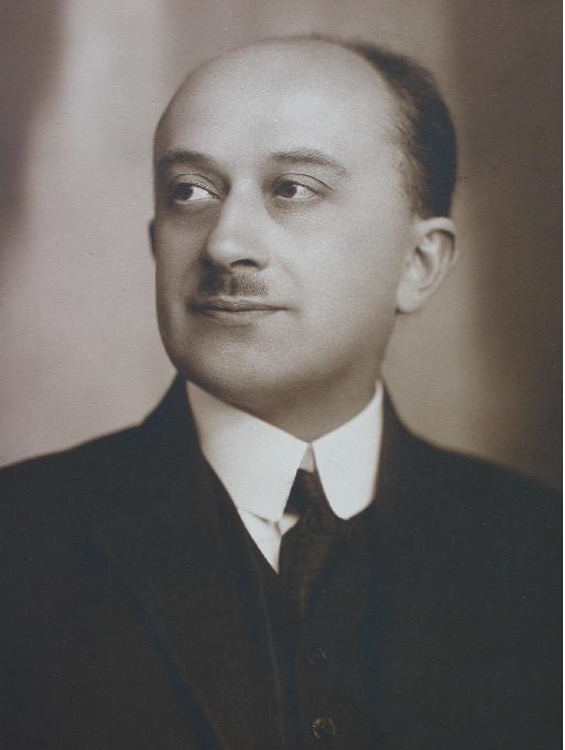
Alexander Albrecht
1885 Arad – 1958 Bratislava
Studies
Alexander Albrecht (1885 Arad – 1958 Bratislava) — composer, conductor, and pedagogue — received his first musical education from the Bratislava cathedral organist Karel Forstner. During his studies at the Royal Hungarian Catholic Grammar School (now the premises of the University Library on Klarisek Street in Bratislava), he became acquainted with Béla Bartók and Ernő Dohnányi. From 1904 to 1908 he studied at the Academy of Music in Budapest — composition under Hans Koessler, piano under István Thomán and Béla Bartók, conducting under Franz Szandtner, and chamber music under David Popper. Concurrently, he studied law in Budapest.
Professional Life
From 1908 he served as organist at St. Martin's Cathedral in Bratislava; in 1921 he became conductor of the Church Music Society at St. Martin's Cathedral and director of the Municipal Music School. He played an undisputed role in raising the quality of the society's performance and in introducing works of 20th-century music both in church services and public concerts. Alexander Albrecht held both posts until the dissolution of the society and the school in 1942 and 1952 respectively. Through his teaching activity — first in the choirmaster's residence at Lodná 12 and later at Kapitulská 1 — he shaped the professional development of many Slovak composers and performers of the younger generation.
Works
Albrecht was among the first 20th-century composers from the territory of today's Slovakia whose music resonated abroad. His language and style grew from the German Romantic tradition (Brahms, Reger), later enriched with elements of Impressionism and Expressionism. He was a synthesist with a distinctive sense for form constructed through variational development.
The central domain of his output is chamber music (Piano Quintet, String Quartet in D major, and others) and songs (Rosenzeit, A szépség himnusza, Three Poems from the cycle Das Marienleben, and others). Works from 1925–45 reveal a leaning towards atonality and the ideals of the New Objectivity (Sonatina for 11 instruments, Tobias Wunderlich, Cantate Domino, and others). The final period (1946–1957) is characterised by a simplification of language, a turn towards Neo-Classicism, and folk elements (Variations, Šuhajko, Concertante Suite for Viola and Piano).
Alexander Albrecht was a personality with deep knowledge of literature, art history, and law. He had a close relationship with nature as an inexhaustible source of artistic inspiration, and a reverence for the works of the human mind. His extensive literary and essayistic output is documented and available in the publication Albrecht, A.: Túžby a spomienky. Hudobné centrum 2008. That publication also includes a study on Alexander Albrecht by Vladimír Godár, who served as editor of the volume.
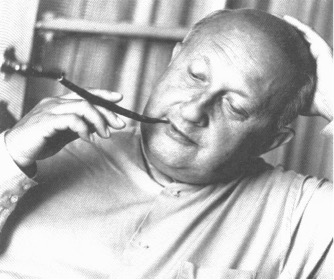
Ján Albrecht
1919 Bratislava – 1996 Bratislava
Studies
Ján Albrecht (1919 Bratislava – 1996 Bratislava) — pedagogue, musicologist, violist, and founder of the Musica aeterna ensemble — received his foundational musical education (violin) in childhood from Professor George Actardjief. He broadened his interpretive horizons in early youth by performing in the family quartet (viola) and in the Church Music Society (violin).
In 1937 he began studying viola under Professor Gabriel Paulíny at the Bratislava Conservatory. After the war he joined the Slovak National Theatre Orchestra as violinist and violist. He completed his studies at the Conservatory in 1950, and at VŠMU in 1954 in the viola class of Professor Rudolf Hofmann.
Professional Life
Already during his studies, Ján Albrecht (nicknamed Hansi by friends and family) began to distinguish himself not only as a performer but also as a personality drawn to reflecting on artistic and scientific problems, to the theory of art and the exact sciences, and as a person with the gift of approaching questions of aesthetics or mathematics from a unique angle. This is documented by manuscript texts such as Expressionism and its Radicalist Assessment, Generalisation of Euler's Theorem of Binomial Coefficients, and Discussion Notebooks on Several Questions of Aesthetics, among others. In 1957 he published university lecture notes, Theoretical Foundations of Violin Playing. The mid-1950s can be considered the beginning of Albrecht's focused, lifelong interest in the visual arts, aesthetics, and music — distilled into manuscript texts, studies, essays, reviews, lecture notes, books, and editorial activities. Ján Albrecht's "literary" legacy amounts to hundreds of texts, written mostly in German, in Slovak, but also in English.
Pedagogue
After leaving the SND orchestra, Ján Albrecht began working as a teacher — from 1955 to 1960 at the Department of Music Education at the Bratislava Pedagogical College; from 1960 to 1967 at the Department of Musicology at the Faculty of Arts of Comenius University; from 1967 to 1982 at the Department of Music Education at the Pedagogical Faculty of Comenius University in Trnava, and concurrently leading the chamber music class at VŠMU in Bratislava.
Musica aeterna
Alongside his "official" teaching activities, he first founded the chamber association Collegium musicum, then in 1968 the Circle of Friends of Early Music, from whose music-making Musica aeterna gradually took shape — the first ensemble programmatically dedicated to reviving sources of early music, primarily from the territory of today's Slovakia and Europe.
Works and the Albrecht House
In the 1970s he published the first volumes of the edition Fontes Musicae in Slovacia and lecture notes on Musical Aesthetics for students of the Pedagogical Faculty of Comenius University; in the 1980s, the books Podoby a premeny barokovej hudby (Forms and Transformations of Baroque Music) and Eseje o umení (Essays on Art). He continued to lead the Musica Aeterna ensemble, edited new editions of early music sources from Slovakia (Castor and Pollux), published reviews, studies, essays, and further texts in professional journals, and "organised" informal artistic gatherings in his home.
After retiring in 1982, he remained active as an essayist, editor, musicologist, and researcher of musical sources, retaining his viola and chamber music class at VŠMU (until 1989). His home on Kapitulská became an even stronger magnet for students, teachers, visual artists, scientists, active musicians, and enthusiastic amateurs — in short, for all who showed genuine interest in art, the social sciences, or mathematics. Together with his wife Viera, Ján Albrecht created there an environment open to new ideas, learned discussions, and controversial debates, but also to simple, warm, friendly — and occasionally bon vivant — gatherings.
In the 1990s he completed the manuscript of the book Erinnerungen eines Pressburger Musikers, was a guest at the University of Vienna, prepared for press the book Die Geisteswelt des Schönen, and continued writing shorter texts. In 1992–1993 he underwent major eye and heart operations; on 20 November 1996 he died suddenly in the garden of his home on Kapitulská.
Social "Recognition"
The former regime "rewarded" Ján Albrecht for his lifelong teaching work — which never confined itself to scheduled hours — with the permanent post of senior lecturer (odborný asistent). It must be said openly that this regime was frequently embodied by his long-standing colleagues, fellow teachers.
A belated recognition for his lifelong pedagogical and musicological efforts — which Ján Albrecht never sought — came in the form of a docentship awarded in 1991, the position of chairman of the Slovak section of the European String Teachers Association ESTA (1991), the Jozef Kresánek Prize of the Slovak Music Fund (1991), and a full professorship in 1995. He received the Prize of the Capital City of the Slovak Republic, Bratislava, on 19 December 1996 — a month after his death, posthumously.
The Albrecht family served art, science, learning, and Bratislava for a documented span of over one hundred years (Ján Albrecht's grandfather — Johann — was a teacher at the Royal Catholic Hungarian Grammar School on Klarisek Street and later headmaster of the German Realschule on Zochova Street). With Ján Albrecht's death, the last male descendant of the Bratislava Albrecht family passed away.
Ancestors and Other Family Members
Ján Albrecht's family had widely branching roots, both on the side of his father Alexander Albrecht and on the side of his mother Margaréta Albrechtová, née Fischer.
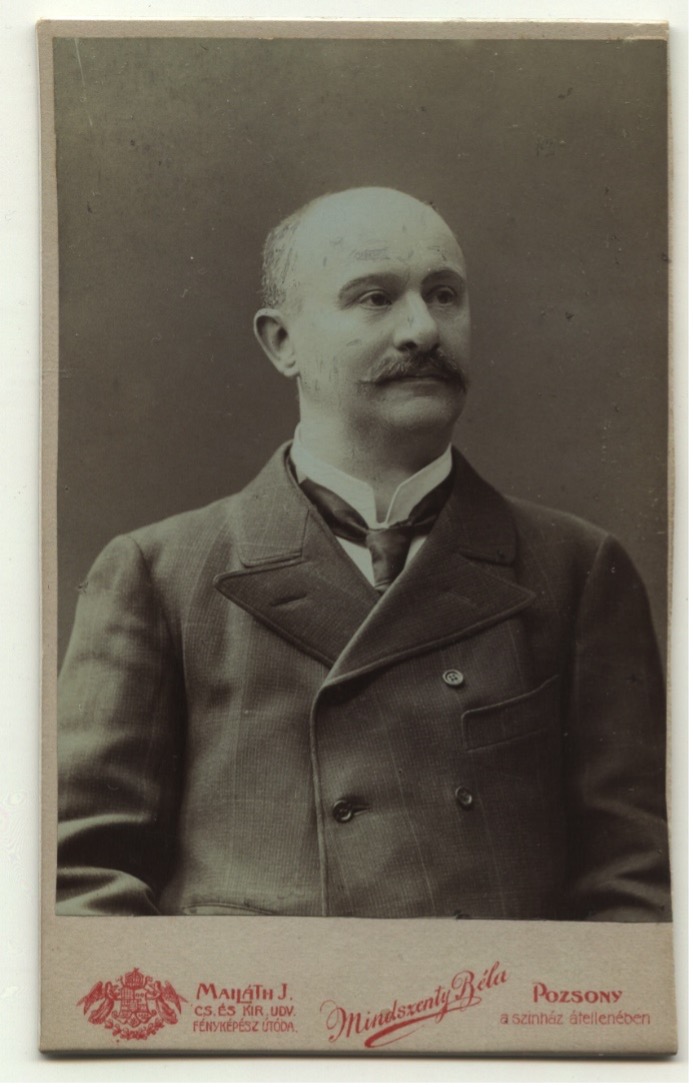
Alexander's father Johannes Albrecht (1852–1926), a well-read and educated man, was a teacher at the Pressburg Catholic grammar school (the building of the Clarissine convent — today the University Library), then headmaster of the state Realschule (the building of today's VŠMU on Zochova Street), later the chief district school inspector, and finally custodian of the Municipal Museum. Alexander's mother Mária (Mariska) Albrechtová, née Vaszary (1864–1913), was a niece of the Hungarian Primate and Cardinal Kolos Vaszary. The artistic inclinations of the Vaszary family are documented by the occupations of her closest relatives — her cousin János Vaszary (1867–1938) was a prominent painter, her nephew Gábor Vaszary (1897–1985) was a writer and screenwriter, and her niece Piri Vaszary (1901–1965) was an actress.
An exceptional figure from the Albrecht family was also Thomas Messer, the son of Alexander's sister Agáta. The vicissitudes of war brought him to the United States, where, as a graduate of the Paris Sorbonne, he gradually became director of the Roswell Museum in New Mexico, head of the American Federation of Arts, director of the Institute of Contemporary Art in Boston, and ultimately stood at the head of the Solomon R. Guggenheim Museum in New York.
The origins of Alexander's wife Margaréta Fischer (1887–1985) offer a window into the genealogy of several prominent Pressburg bourgeois families — the Fischers, the Fröhlichs, the Jurenáks, and the Lehners. Johann Fischer the Elder, a member of the Pressburg city council and a chamber councillor, was elevated to the nobility by Emperor Franz I in 1832 in recognition of his services to the development of trade. In 1825, together with the physician Michael Schönbauer, he founded in Pressburg a champagne factory based on an original French recipe, with which he won a bronze medal at the World Exhibition in Paris in 1867! Its founder was therefore not Ján Evangelista Hubert, as had been assumed until recently. Hubert purchased the factory from Johann Fischer only in 1877. Two generations of the Fischer family — Johann the Elder and Johann the Younger, who was Margaréta Fischer's grandfather — belonged to the wealthiest, yet also socially engaged, families of the city. They held senior positions in the nascent banking sector, in the industrial and commercial chamber, as well as in charitable and support associations. Margaréta's father — Johann the Youngest (1841–1911) — served in the Imperial and Royal Austrian Army, for which he was awarded the Silver Commemorative Medal. His civilian profession was that of customs forwarding agent for the Royal Hungarian State Railways.
Margaréta Albrechtová's (Fischer's) mother came from the Jurenák family. They had settled in Pressburg before 1803 and, although they did not initially belong to the wealthy families, their timber trade must have been successful. This is attested by the portraits of Adam and Ludmilla Jurenák, painted by the well-known Austrian artist Johann Peter Kraft in 1810. Commissioning such works from a member of the Vienna Academy and professor of history painting was certainly not inexpensive. The large Jurenák family was characterised by courage and a desire for education and social advancement — Jozef Jurenák (1809–1857) studied pharmacy in Paris and travelled across Europe, mainly to Great Britain. Margaréta's grandfather Anton Jurenák (1813–1896) undertook a business journey through Germany, France, England, the Netherlands, Belgium, Prussia, Switzerland, Italy, Greece, Turkey, and Russia. In the 1880s he appears in directories as the owner of a house at Gröslingova No. 4, which is the rear entrance to the Jurenák Palace (today the seat of the Local Authority Bratislava – Staré Mesto). As a representative of the 1st Danube Steam Navigation Company, he was the first to use a steamship constructed in England for Danube river transport. His younger brother Karol was a great admirer of Richard Wagner, maintained correspondence with Robert Volkmann (1815–1885) — who dedicated his 3rd Serenade for String Orchestra to him — and was friends with Johannes Brahms, who was a guest at the Jurenák Palace, where family concerts were held.
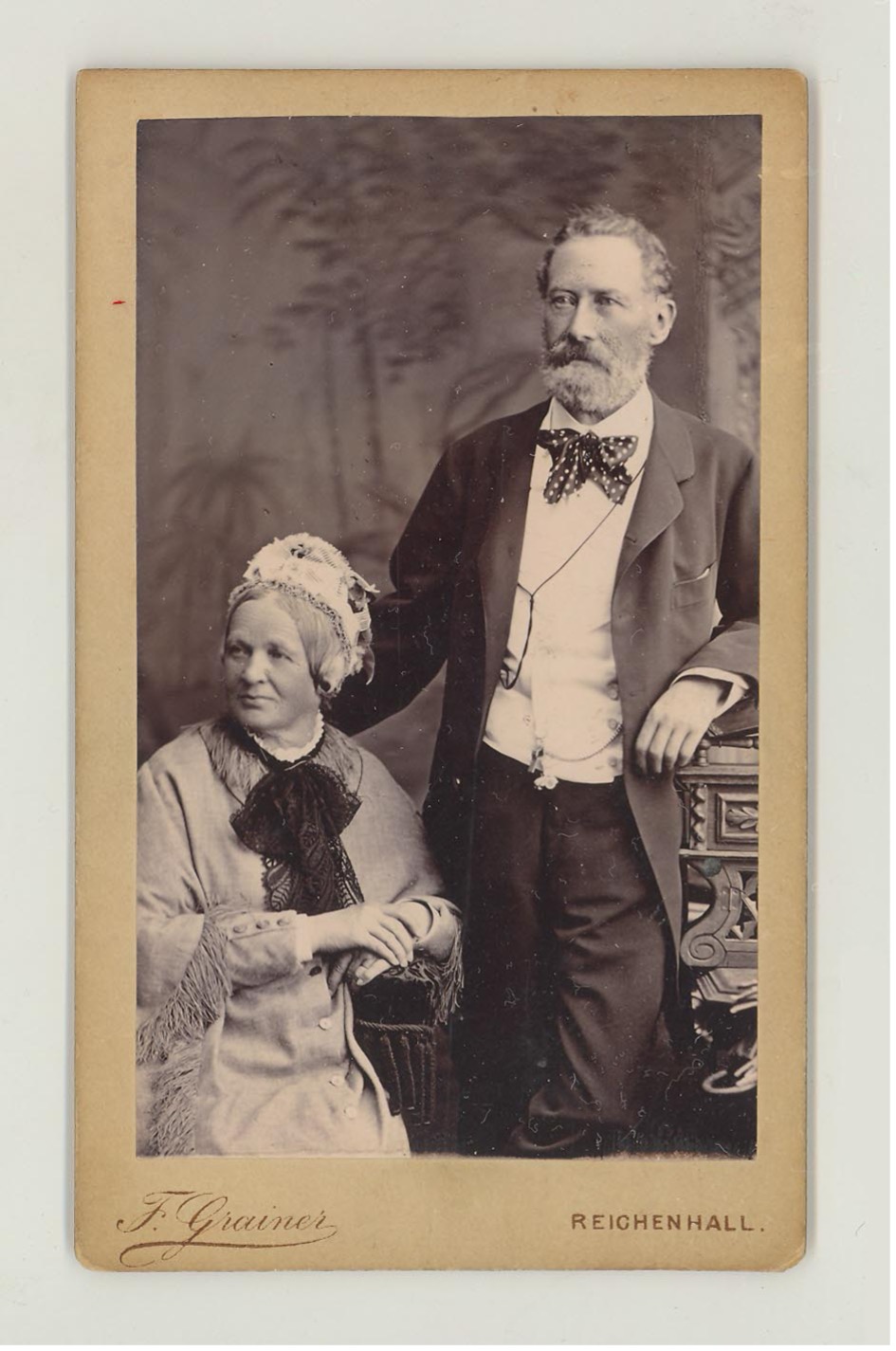
Margaréta Albrechtová's (Fischer's) sister Gertrúda married Gustav Lehner. Their son Eugen Lehner became the violist of the world-famous Kolisch Quartet, which gave the premieres of the 3rd and 4th String Quartets of Arnold Schoenberg, Berg's Lyric Suite, Webern's String Trio and String Quartet, as well as the 6th String Quartet of Béla Bartók. The Kolisch players studied their works exclusively from scores, not from parts; they played from memory in a uniquely way and became among the most dedicated advocates of new music in the 1920s and 1930s. After fleeing Europe ahead of fascism, Eugen Lehner applied for a position in the viola section of the Boston Symphony Orchestra. When the chief conductor Sergei Koussevitzky saw him at auditions with the BSO in 1939, he took him on without a competition — he remembered him from a performance of Berg's Lyric Suite ten years earlier in Wiesbaden, Germany. Lehner played in the BSO until 1982; concurrently he served first with the Stradivari Quartet, then with the Boston Fine Arts Quartet, and as a teacher at the New England Conservatory he mentored dozens of world-class chamber musicians.
Cultivated, sensitive, and educated women were, finally, Margaréta Albrechtová (Fischer) and her sister Jeanny Fischer (1883–1970). Jeanny obtained the diploma of the Pressburg teacher-training institute in 1902; she never married, was a lifelong companion of the Albrecht family, and lived with them in a shared household, first on Lodná Street and later at Kapitulská No. 1. Alexander's wife Margaréta completed the teacher-training institute in 1910; even earlier, in 1905, she had obtained a diploma as a teacher for the people's elementary school; she later became a student at the Faculty of Arts of the Royal Hungarian Academy in Budapest and at the Elisabeth University in Pressburg. In 1909 and 1910 she attended French-language courses in Geneva and Paris. She married Alexander Albrecht on 28 April 1918. Despite her outstanding education and qualifications, she always taught at the lowest level of schooling — at the German elementary school on Zochova Street.
(Compiled according to studies by Zuzana Francová from the yearbooks of the Bratislava City Museum)
Memories of the Albrecht House
"Ján Albrecht's personality attracted students who were captivated by his spirit, his knowledge of music and the visual arts, his broad general culture, and his wit. The classroom was not enough for Albrecht's warmth, so he taught at home, where he offered everyone tea or coffee in porcelain cups and extended the lesson as long as it was needed. The atmosphere and conditions were co-created by his mother, whom everyone called Gréti néni, and from 1969 by his wife Viera. He opened his extensive library with equal generosity — it was accessible to anyone, even in the master's absence"…"He always listened to a student and discussed with him topics further afield that were necessary for understanding the problem"…. "Within the group he upheld the principle of qualitative hierarchy — if someone masters something better than others, let him apply his abilities to the fullest. The universal trait of Albrecht was the effort to awaken a sense of beauty, enthusiasm, and to cultivate humour even in pedagogical relationships." (Veronika Bakičová: Musica aeterna & Ján Albrecht, AEPress, 2006)
The composer Professor Ivan Parík describes the atmosphere of the gatherings and the beginnings of Hansi's "University on Kapitulská" as follows: "After Mass (at St. Martin's Cathedral) one went to Albrecht's house, where humanity, kindness, cultivation, a musical and supremely intellectual environment, and mutual respect among family and friends prevailed. Tolerance for different opinions was cultivated there, chamber music was played, literature and the visual arts were discussed, there was a spirit of understanding and of asking 'why is it so.' Gradually Hansi took over the leading role (after his father Alexander), and with him we became lifelong friends."
Music-making among the Albrechts was therefore not something imported — it was a way of life. Hansi's long-standing chamber partner and friend Ladislav Kupkovič says: "Hansi was in love with chamber music; at any time he was willing to devote hours to it, but the important thing was that he had the infrastructure for it. The Albrechts had in their cupboards almost all the sheet music that could ever be needed. Remarkably, otherwise untidy Hansi always kept his music in perfect order. The infrastructure went further, too — for example, there were always enough (very beautiful) music stands, his aunt always brought something small to eat (chamber music sessions sometimes lasted the whole night!), and he, in this he was truly a genius, brewed his famous and excellent tea."
Vladimír Godár, in the book already cited, recalls Hansi and the Albrecht house as a place "where not only love of music was cultivated, but above all love of life in its most varied forms. If at school they taught us to make music, at Hansi's we learned to love it"… "Hansi was a Janus-faced, many-sided being, but all his guises were united by a dominant trait — goodness of heart, which was an expression of love. For this gift of love so many people loved him; for it they loved the rooms of his apartment, and for it they came to him."
Quotations are from the book by Veronika Bakičová: Musica aeterna & Ján Albrecht, AEPress, 2006